

Is it possible to make homemade eyeliner?
Jan 21, 2026
Is it possible to make homemade eyeliner? This is a question that has intrigued many makeup enthusiasts, especially those who are interested in natural and DIY beauty products. As an eyeliner supplier, I've seen a growing trend towards homemade cosmetics, and I'm here to explore the feasibility, benefits, and potential drawbacks of making your own eyeliner.
The Appeal of Homemade Eyeliner
The idea of making homemade eyeliner is appealing for several reasons. Firstly, it allows you to have full control over the ingredients. You can choose natural, organic, and hypoallergenic components, which is great for those with sensitive skin or allergies. For example, you can avoid harsh chemicals like parabens, sulfates, and synthetic fragrances that are commonly found in commercial eyeliners. Secondly, it can be a fun and creative project. You can experiment with different colors, textures, and formulas to create a unique eyeliner that suits your personal style. Finally, making your own eyeliner can be cost - effective, especially if you already have some of the ingredients at home.
The Science Behind Eyeliner
Before we dive into the process of making homemade eyeliner, it's important to understand the basic components of eyeliner. Eyeliner typically consists of a pigment, a binder, and a solvent. The pigment is what gives the eyeliner its color. Common pigments include carbon black for black eyeliner, iron oxides for brown and red tones, and ultramarines for blue and purple shades. The binder holds the pigment together and helps it adhere to the skin. Examples of binders are waxes, gums, and resins. The solvent is used to dissolve the binder and make the eyeliner easy to apply. Water, alcohol, and oils are common solvents.
Ingredients for Homemade Eyeliner
When making homemade eyeliner, you need to source the right ingredients. For the pigment, you can use natural sources such as activated charcoal for black, beetroot powder for red, and turmeric for yellow. These natural pigments are generally safe for use around the eyes, but it's important to note that they may not be as long - lasting as synthetic pigments. For the binder, beeswax is a popular choice as it is natural and has good adhesive properties. You can also use gum arabic, which is a natural gum that can be dissolved in water. As for the solvent, distilled water is a safe option, but you can also use witch hazel, which has antibacterial properties.
A Simple Homemade Eyeliner Recipe
Here is a simple recipe for homemade black eyeliner:
- Ingredients:
- 1/2 teaspoon of activated charcoal powder
- 1/4 teaspoon of beeswax
- 1/4 teaspoon of coconut oil
- A few drops of vitamin E oil (for added moisture and preservation)
- Instructions:
- In a double boiler, melt the beeswax and coconut oil together. Stir constantly until they are well - combined.
- Remove the mixture from the heat and let it cool slightly.
- Add the activated charcoal powder to the melted mixture and stir vigorously. Make sure the powder is fully incorporated.
- Add a few drops of vitamin E oil and stir again.
- Pour the mixture into a small, clean container with a tight - fitting lid.
- Let the eyeliner cool and solidify completely before using.
Potential Drawbacks of Homemade Eyeliner
While making homemade eyeliner has its advantages, there are also some potential drawbacks. One of the main concerns is safety. The eyes are a sensitive area, and using homemade eyeliner can pose a risk of infection if the ingredients are not properly sterilized or if the eyeliner is contaminated. Additionally, natural pigments may not be as stable as synthetic ones, which means the color may fade more quickly or change over time. Homemade eyeliner may also not have the same smooth application and long - lasting formula as commercial eyeliners.
Commercial Eyeliner Options
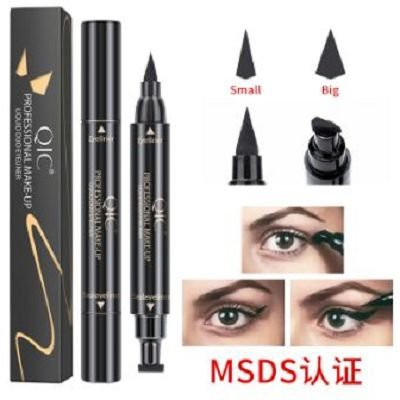
As an eyeliner supplier, I offer a range of high - quality commercial eyeliners that are formulated to meet the highest standards of safety and performance. For example, our 2 in One Stamp Liquid Eyeliner is a unique product that combines the convenience of a stamp and the precision of a liquid eyeliner. It has a long - lasting formula that stays put all day, and the stamp design makes it easy to create a perfect winged look.
Another popular product is our Black Eyeliner For Perfect Winged Cat Eye. This eyeliner is specifically designed to help you achieve a classic winged cat - eye look. It has a rich, black pigment that provides intense color payoff, and the fine tip allows for precise application.
If you're looking for something more glamorous, our Shiny Liquid Eyeliner is a great choice. It contains shimmering particles that add a touch of sparkle to your eyes. The liquid formula is smooth and easy to apply, and it dries quickly to a smudge - proof finish.
Conclusion
In conclusion, it is possible to make homemade eyeliner, but it comes with its own set of challenges. While the idea of using natural ingredients and creating a personalized product is appealing, safety and performance should be carefully considered. On the other hand, commercial eyeliners offer a reliable and convenient option with a wide range of colors, formulas, and designs.
If you're interested in purchasing high - quality eyeliners for your business or personal use, I encourage you to reach out to me for a procurement discussion. I'm happy to provide samples, answer your questions, and work with you to find the best eyeliner products to meet your needs.

References
- "Cosmetics Science and Technology", Third Edition, edited by Mitchell A. Draelos
- "The Complete Book of Essential Oils and Aromatherapy" by Valerie Ann Worwood